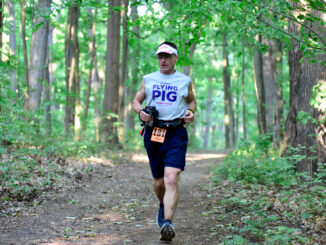
Only a half dozen years after her first marathon, Alisha Moreno has conquered one of the most challenging ultramarathons on Earth, the Cocodona 250.
Moreno, 36, of West Virginia, completed the race in 119 hours, 18 minutes and 28 seconds. She was the 54th woman and the 217th overall finisher.
The Cocodona 250, which is closer to 256 miles total, is a point-to-point ultramarathon in Arizona that begins in Black Canyon City and ends in Flagstaff.
Here’s our interview with her:
When did you start running? What was your first ultra? Can you tell us how you went from an average road runner to taking on (and conquering) one of the world’s most challenging events, the Cocodona 250?
My parents are both healthy and fitness motivated individuals, so I started running at the young age of around seven. My dad said if I ran a mile with him, he’d buy me this old, used dollhouse I had been eyeing. I still have that dollhouse. But I didn’t’ start (road) running until college when my dad asked me if I wanted to sign up for the Clarksburg 10K. After training and doing that race with my family, I was hooked on (road) races off and on for years. I thought I liked it for the challenge, but I’ve only recently learned I love running for the social aspect. In 2019 or 2020, I watched a video about Moab 240, a desert 240-mile ultramarathon out West. I had never heard of ultras until that point and something fascinated me about it. I felt so confident then that I could one day do that. I didn’t start taking on trail running or even my first marathon until I met my now husband Donald Marsh in 2020 who had done JFK 50 Miler and encouraged me to start running trails. It was fun and a totally different challenge. I’ve been hooked since. Each distance was to (mentally and physically) one day prepare me for a 200 mile distance.
Why did you decide run 250 miles? What training adjustments did you make to prepare for an event longer than 100 miles?
I guess I answered that above. I saw that video and saw ultramarathons existed and I wanted to be a part of it. After running trails for so long, I started meeting more and more people in the community that had done 100 milers and then 200s. I met women that I looked up to like Sarah Hodder who had done Bigfoot 200, Anne Tisdale who had done Cocodona 250 and won Arizona Monster 300, my friend Sarah Wallace who had done Tahoe 200, Cocodona 250, and Southern States 200, and my friend Emily Flinn who had done Cocodona 250 and Southern States 200. These women told me it’s possible and that women deserve to take up space.
Haa Cheng Thai, a dear ultra running friend that is a true badass that accomplished 13 100 milers in a year’s time and was the one that told me, “A 200 is easier than a 100 because you have more time.” That always gave me hope I could finish a 200. Maybe a little too much hope since I took my sweet time at each crew stop.”
My training didn’t feel too much different from a 100-miler. More mileage, more specific training, more focus on getting me healthy to start line. I leaned on the advice of others who had done these races and what they recommended. It was challenging doing a majority of my training in the West Virginia winter. It required a lot of sauna time to get myself heat acclimated, and finding routes with a lot of long elevation gain so I could train longer hills. And training with a heavy pack was a must. You are required to carry a minimum of 4 liters of water in the first section, on top of all your other required gear and food, so my pack was an easy 15lbs or more. You don’t want to go into that without ever having trained for it.
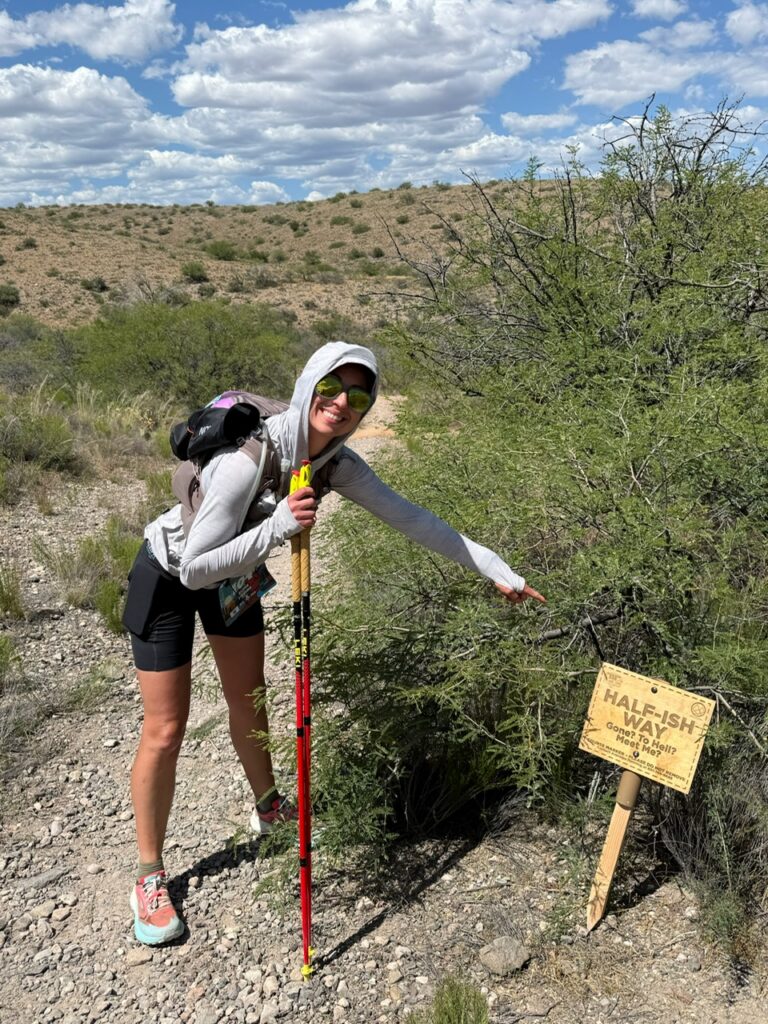
How did you mentally prepare for so many hours of running? How did that approach help you during the event?
Taking it aid station to aid station really helped section it out in my brain. If I caught myself thinking “Oh my gosh, I have another 150 miles to go…” I would remind myself I just need to get to the next aid station. Time didn’t exist out there for me. Miles felt like they lasted hours and time resting with my crew felt like seconds.
Can you tell us about the Cocodona 250? What stood out the most? What surprised you? How did you feel? What were your biggest challenges?
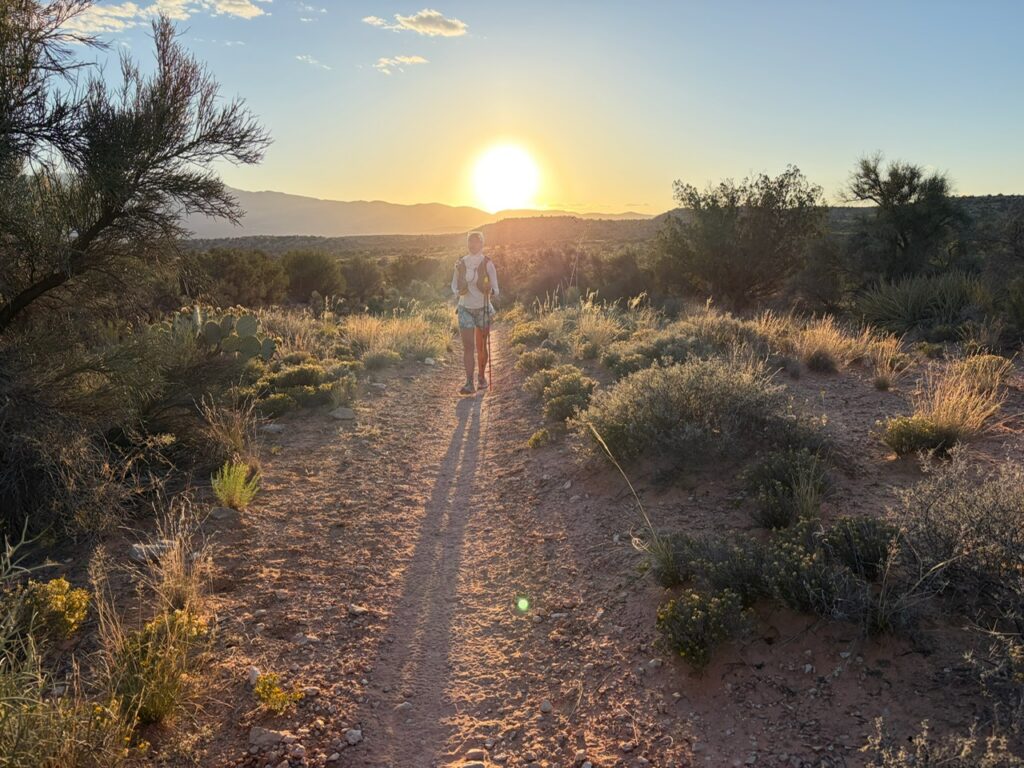
Cocodona 250 takes you through some incredibly beautiful terrain and areas I never thought I’d see in Arizona. It’s not just all vast desert with saguaro cacti. I climbed up to pine forests and saw wildflowers, went through grassy cow pastures, used all fours to climb red rocks in Sedona, and went through gorgeous green canyons. It is really cool to think I ran and hiked my way from Black Canyon City to Flagstaff and saw all of that. I felt awful, to be honest. I went through so many highs and lows that were constant. You don’t do these races to feel good, you do them to see your limit and how it’s going to challenge you and how you’ll overcome those challenges. For me, going in, I knew sleep deprivation and nutrition were going to be my nemesis. And they were. Going into the nights were my hardest sections (sorry Amy and Emily), so I was slowest through those. And naturally I’m a slow and difficult eater, so my crew had a heck of a time getting me to stay on top of that. But my biggest surprise was how well my body held up. I didn’t develop a lean like some runners do, I didn’t have any major injuries pop up, and I think that was most surprising to me.
Who all was in your crew? Can you tell us about them and their efforts? What were some strategy changes they made to help you in the 250-mile event?
My crew was the best! They didn’t have the best runner, but I had the best crew, hands down. They consisted of Donald Marsh (my husband), and my friends Emily Flinn, Jesse Smith, and Amy Dorow. All three of them are accomplished ultrarunners and badasses. They are familiar with how races work and they are amazing people that care a lot about me (how lucky am I?)! Emily has a lot of great experience in 200s, and she’s so detail-oriented, so she was able to do so much planning and figuring out mid-race how long I needed to spend at each aid station so I wasn’t going to get too close to cutoffs. Since my husband understands my diet (vegan) best, he did his best to find food I would eat (a lot went to waste unfortunately because I became a toddler during the race). Everyone also became my pacer during the race, so I had everyone alternating pacing sections, so that they could maximize their own rest time. It’s a LOT of work to crew and pace, especially crew. So I’m super thankful for each of them sacrificing time to come out and take care of me all week.
By the end, was the distance or the time the more difficult to handle? What did you rely on to push through?
Time was the most difficult. The entire week I just wanted to be done (never wanted to quit), just be done. And when each step is sending nerve pain in your foot, it’s hard to push. But pushing to get to each aid station helped me mentally. It meant I got to lay down and take my shoes off for a little bit and see my friends.
What was it like to finish? How did you celebrate?
I had been emotional during the race, so I thought the finish would make me super emotional. But instead, I had linked up with another runner to do the last full section going up and down Elden, which helped each of us get through that last hard section. We had to take care of ourselves, meaning staying on top of caffeine and nutrition. Doing that, I felt so strong and ready for that finish line. Supringisly I was running most of the last 2 miles to the finish. Crossing that finish line seemed to get there so fast compared to the rest of the race.
My friends and I got a small nap and went back to the finish line to watch golden hour (the last hour of the race), and went out to lunch. After being out on the trail all week, I just wanted to maximize what time I had left with my friends at that point.
Have you run again since? What has your recovery been like?
Recovery for this long of an effort will require patience, so no running, weight lifting, or heavy efforts for at least a week. Just walking, eating, and napping. Making sure I get lots of fluids, food (complex carbs and clean protein, supplements, and SLEEP.
What’s next for you? The Barkley Marathons?
Hah! Would be cool to be the next Jasmin Paris, but I think I would need to work on my orienteering skills, aid station efficiency, nutrition, and sleep deprivation first. If you would have asked me mid-race at Cocodona if I would do another 200 I would have said “No, I’m retired”. But less than 24 hours after, I was already wondering if I could do it again, and better. So, possibly another 200 next year after a big break. But in the meantime, I’ll probably sign up for the West Virginia Trilogy (50k Friday, 50M Saturday, half marathon Sunday).
Any tips you have for someone thinking about taking on a multi-day race?
If you’re thinking about it as much as you are, just sign up. Commit to the training, and remember it doesn’t have to be perfect, just consistent and your best. If you want an adventure bad enough, you’ll see that finish line. If I can do it, anyone can.