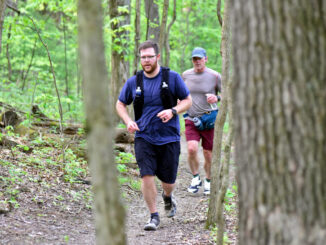
Runners often ask themselves the question: Should I run the day after a marathon?
The answer is that movement of any sort helps with recovery, according to some of the most experienced ultrarunners in North America.
Running, walking, biking and hiking are excellent forms of recovery the day after a distance race, so long as there are no injuries, of course. Any strains, sprains, pulls, tears, breaks and worse should be given ample time to heal correctly – everyone else should hit the trails.
“I think there’s a lot of merit to show that you should get your body moving immediately,” said Alec Cline, who, in 2024, set the Midwest Grand Slam of Ultrarunning time record at 90:57:42.
‘Movement is medicine’
Cline, 29, of Canton, Ohio, has been running for about eight years.
“Never ran in school,” he said.
His first few ultramarathons taught him several valuable lessons.
“When I first started doing ultras, I would just lay in bed after work every day just because I was so sore,” Cline said. “Honestly, I think that causes injuries more.”
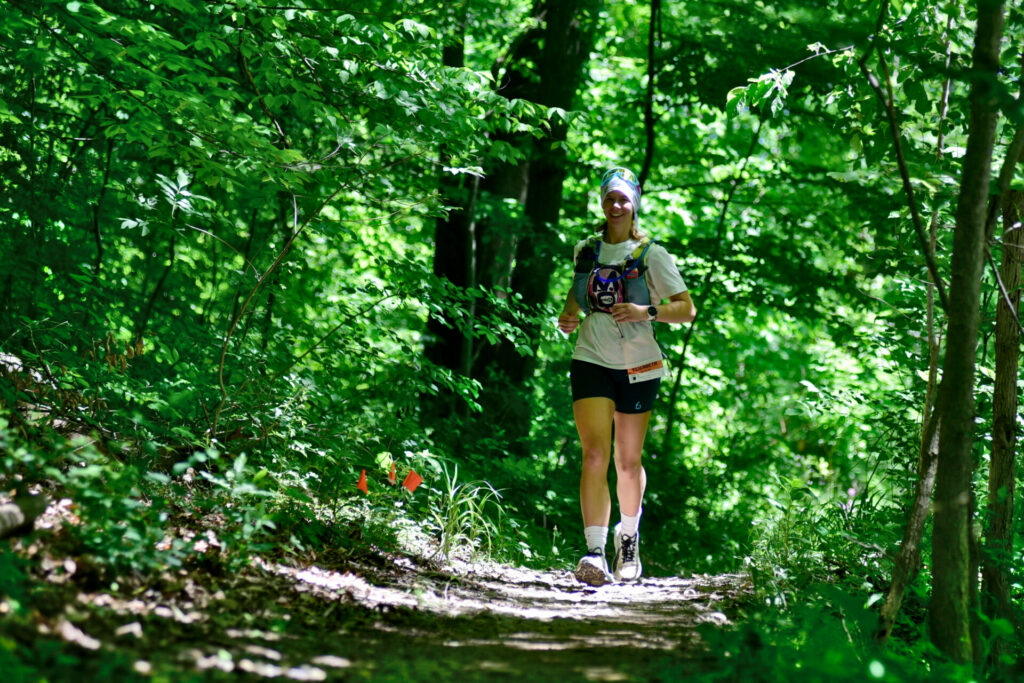
Movement after a race promotes blood flow that helps your body rapidly clear and process lactate, which is a byproduct of lactic acid.
“Our body wants to move,” Cline said. “Movement is medicine.”
An easy jog is the best way to begin the recovery process, but sometimes even less is helpful.
“I’ll start walking,” Cline said. “I’m not saying run hard, but go jog for 10 minutes.”
MORE: Mohican Trail 100 winners take us through their race
‘Activities to help the recovery’
David Corfman, who is one of 38 people in history to run 100 100-mile races, agreed with Cline.
He said doing chores at home, like mowing the lawn, is a great way to stay active after a race.
“The muscles and joints get abused during the race, and they need gentle massaging to help recover,” Corfman said.
Sitting around after a distance event is never an option for the 63-year-old from West Chester, Ohio.
That means even when it hurts.
“Movement and activity, no matter how uncomfortable, provides that massage, better than a masochistic sports therapist named Helga,” Corfman said.
And again, it doesn’t always have to be running.
“I don’t run for a couple days, but certainly walk and perform other activities to help the recovery,” Corfman said. “I also try to add some extra protein, but don’t get hung up about it. What is important, though, is drinking plenty of water.”
Subscribe to Wilderness Weekly on YouTube at youtube.com/@WildernessTube.
Email Us: editor@wildernessweekly.com